:quality(70))
:quality(70))
Thorpeness and Ogilvie's invention of a water inspired resort
Around one hundred years ago, Thorpeness in Suffolk was a small fishing hamlet slowly being eroded by the North Sea, awaiting its transformation by Scottish playwright, barrister, and architect Glencairn Stuart Ogilvie. This awaited transformation was what took it from hamlet to the fairy-tale holiday village that continues to delight visitors today.
In 1910, storms flooded the area, at that time known as Thorpe, and Ogilvie commenced his transformation of the hamlet as he blocked the flooded Hundred River to create the Meare, a 60-acre man-made lake. Thorpe was swiftly renamed Thorpeness, and the Meare became the centrepiece of this new Edwardian holiday resort. Water has always had a way of drawing in those needing rest, and both the Meare and proximity to the seaside made Thorpeness ideal from the start.
Thorpeness is one of only two purpose-built resorts of its kind in Britain, further solidifying the particular idealism and fantasy behind Ogilvie's vision. He shaped Thorpeness around Ebenezer Howard's ‘Garden City’ concept of urban planning. A model that takes the best elements of both town and country in order to produce a cooperative, nature-integrated space and, in the case of Thorpeness, a resort.
Every element of Thorpeness carries the same dreamy, almost fictional quality of the village: the mock Tudor architecture and the childhood magic (such as Meare's tiny islands being named for a place or character from J.M. Barrie's Peter Pan), have all survived the one hundred years since Ogilvie’s Garden-City-Resort dream began. Yet the question lingers as to how long these elements of Thorpeness will survive; in the winter of 2025, four homes were destroyed due to coastal erosion, and this does not seem to be halting. Many individuals close to the coast are packing away their lives without any other choice; whilst in March 2026 a group of locals helped fund a £270,000 temporary rock bag scheme to buy a few years of protection. The eroding hamlet awaiting its transformation was only changed aesthetically. The natural erosion never ceased.
That same instinct for turning necessity into fantasy is what drew ARC to Thorpeness. The ARC tower is the village’s Grade II-listed former water tower, transformed over two years into a memorable group holiday house by architect firm PARTI, owned by husband and wife architect duo Eleanor and Tom Leahy. The tower was close to being condemned with its failing steel frame and crumbling bricks, but Eleanor and Tom embarked on their restoration of ARC Thorpeness with the knowledge that they were there to rescue the space. As they boldly reimagined one of Suffolk’s most distinctive coastal buildings, Eleanor and Tom kept alive a part of Thorpeness’ history.
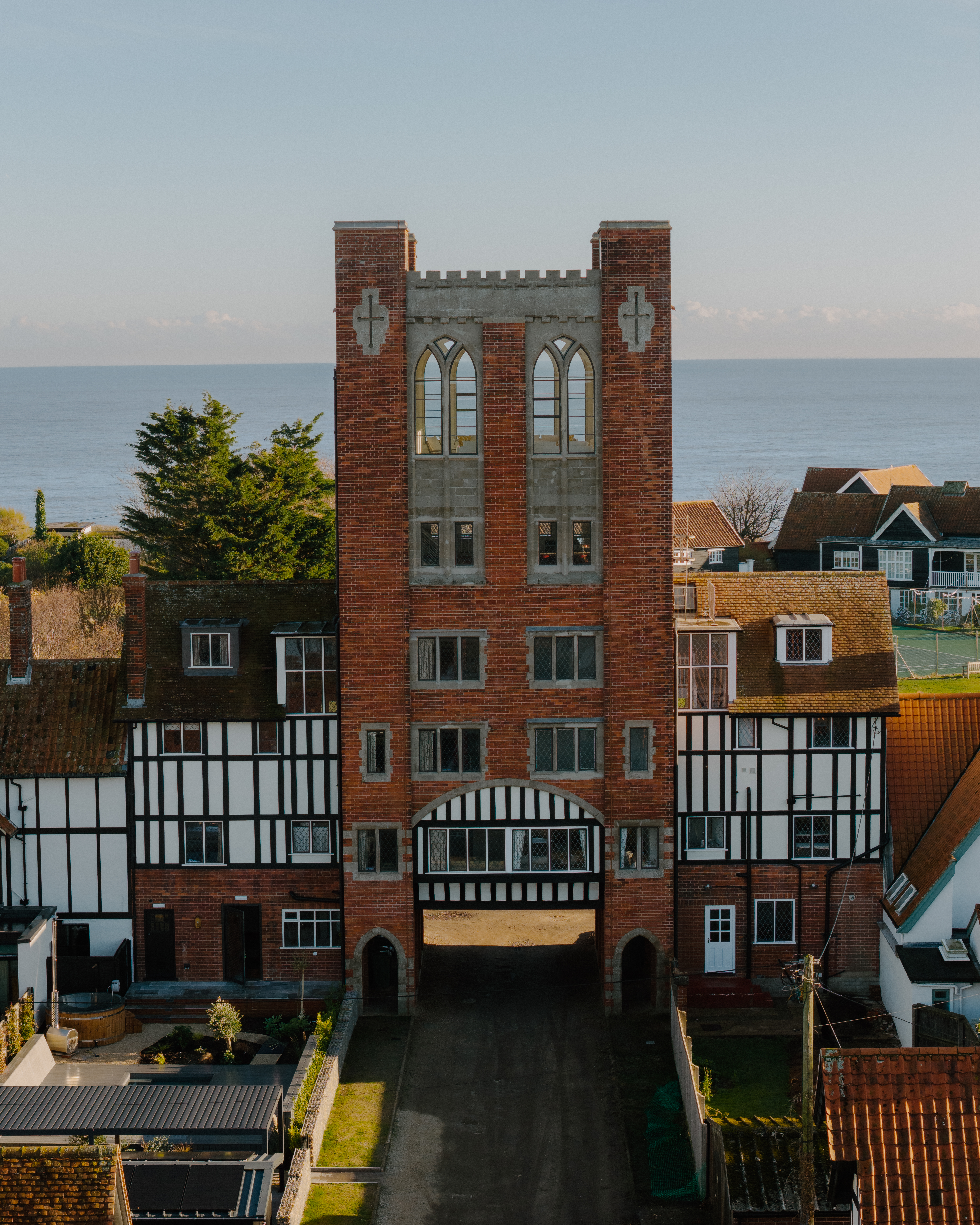
ARC Thorpeness sleeps up to 20 guests across eight bedrooms and five floors, and borders the Country Club, offering the chance to turn back the clock, not just for adults but for little ones too. By taking a break from all things digital and spending time at the Club, guests reconnect with both nature and the surrounding village community, just as the Garden City concept originally envisaged. That sense of community was clear from the start. As Tom Leahy recalls, "We held an open house to share the building's history and 240 people came, so many that we had to move to the local Country Club. That warmth has shaped everything about how we want ARC Thorpeness to be used: a place for people to gather, make memories, and feel genuinely at home in one of the most extraordinary buildings on the Suffolk coast."
Eleanor and Tom completed a circle Ogilvie began a century ago: making the most of something that is in the midst of chaos, of potential destruction, and turning it into something that both celebrates and interacts with the already existing. Thorpeness cannot help but remind us of the repetition and circularity of both nature and history: just as the flood occurred in 1910, the coast of Thorpeness is currently eroding away, but attempts to make good of these spaces, to allow us to see the beauty of the Suffolk coastline, prevail.