:quality(70))
:quality(70))
A conversation with the inaugural recipient of the ARC Thorpeness Art Prize
Anna Woodward sat down with Hazel O'Sullivan to discuss her practice after becoming the inaugural recipient of the ARC Thorpeness Art Prize. O'Sullivan's work depicts 'architectural formations that inherit geometries of pagan-Celtic and deconsecrated Insular forms, recast through a machine aesthetic', with her aim being 'to construct a futuristic, palimpsestic language where ancient symbols are reformatted as mythological emblems.'
Her work is currently on display at our ARC Thorpeness property. Read below:
ANNA WOODWARD
Congratulations on becoming the inaugural recipient of the ARC Thorpeness Art Prize. What drew you to apply for the Prize?
HAZEL O’ SULLIVAN
I applied to the ARC Prize because I was excited by an opportunity to focus on the sculptural aspect of my practice. My ideas and processes take place as diagrammatic sketches, and the prize offered an opportunity to showcase them in a very unique location.
ANNA WOODWARD
We have worked together across other projects such as Good Eye Projects, GEP and ARC Salon — both have a core focus on supporting artists and creating repeat opportunities. As an artist do you feel this is important and how does it influence your practice?
HAZEL O’ SULLIVAN
We've worked together at the GEP Artist Residency, Saatchi Gallery and Collective Ending, which have been really exciting moments for me in London. It's refreshing to be given a level of trust by GEP and ARC, allowing my work to develop and move in different directions through these opportunities.
ANNA WOODWARD
How would you describe your practice and an insight into the work you have created for the ARC Prize?
HAZEL O’ SULLIVAN
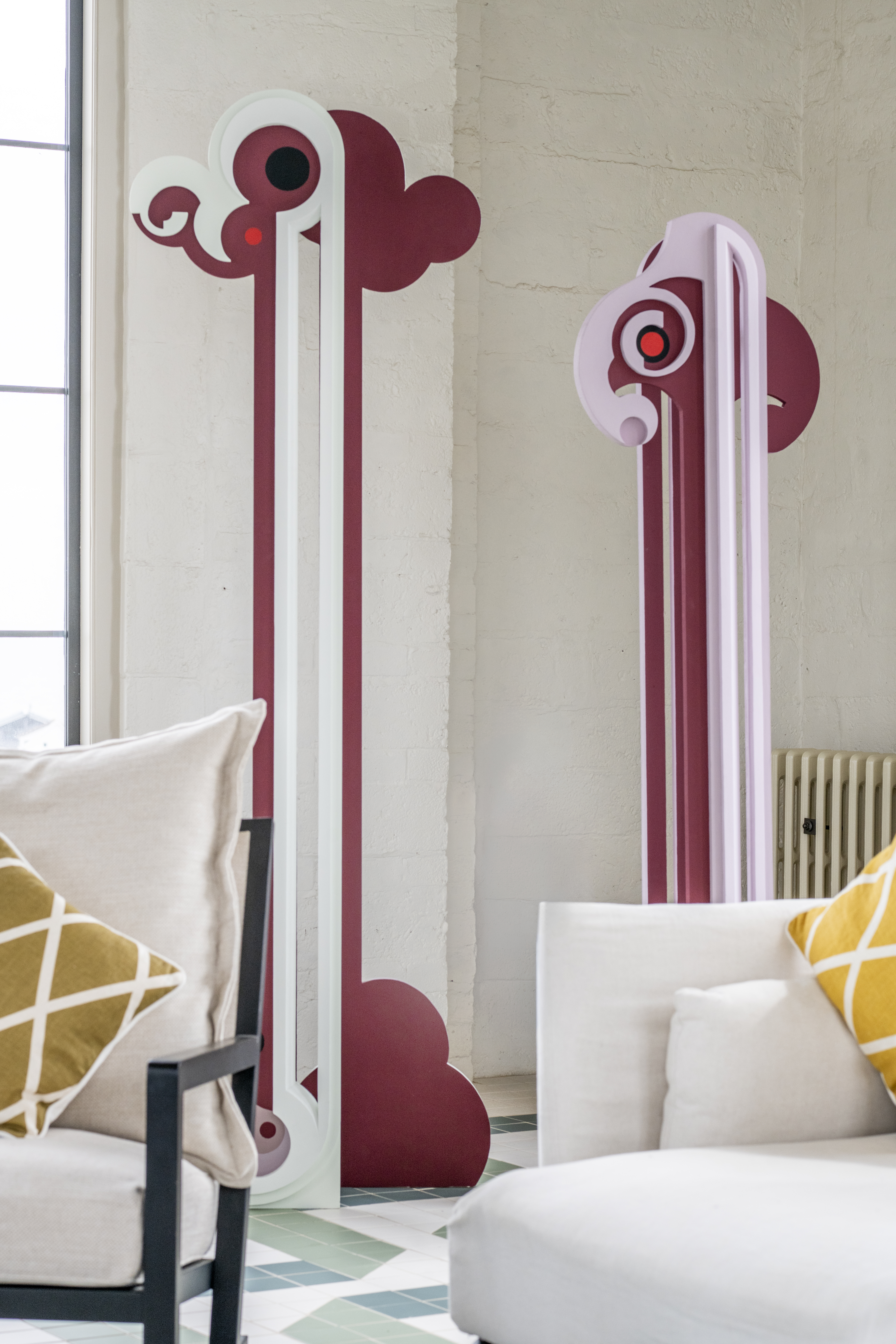
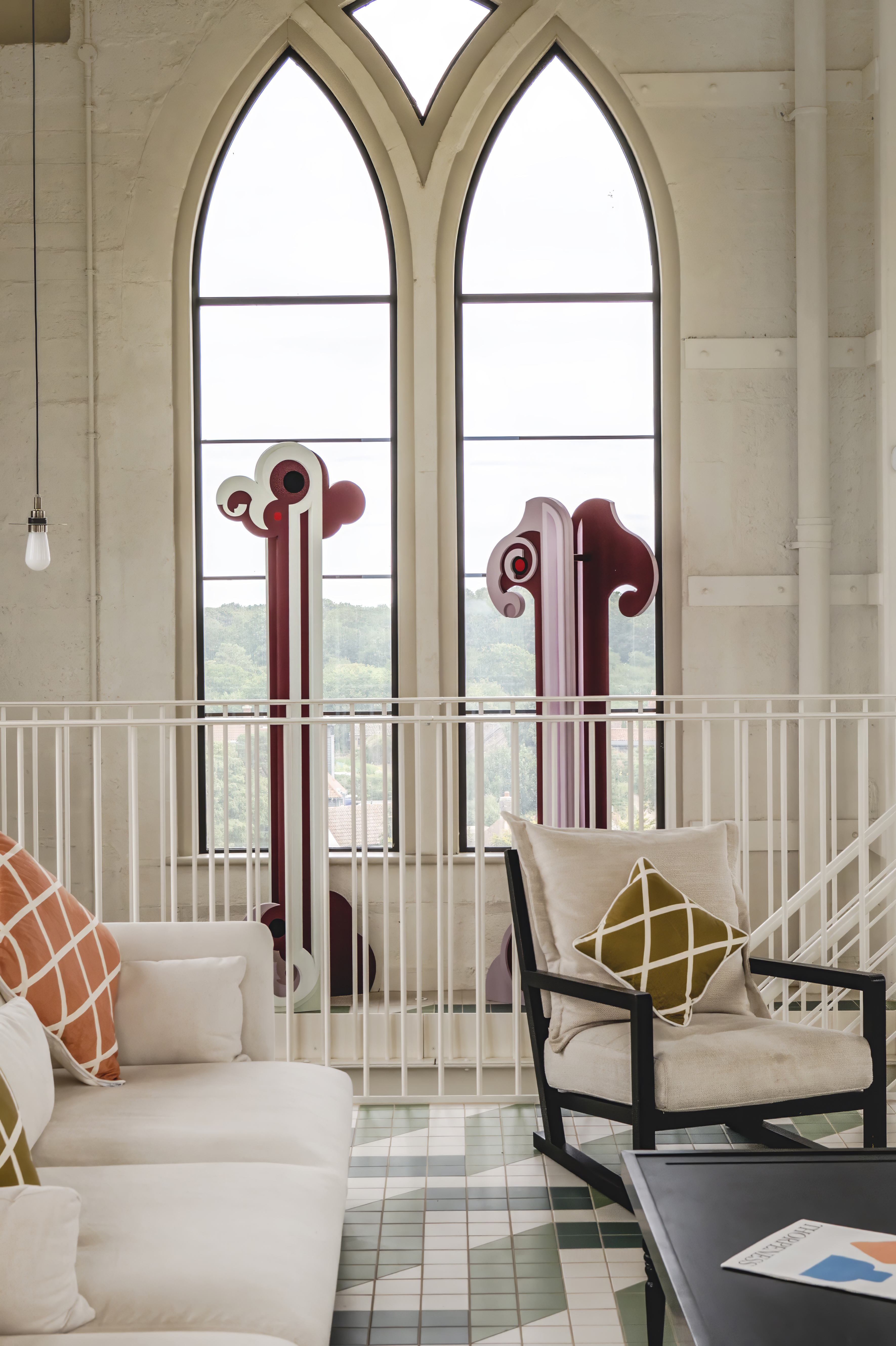
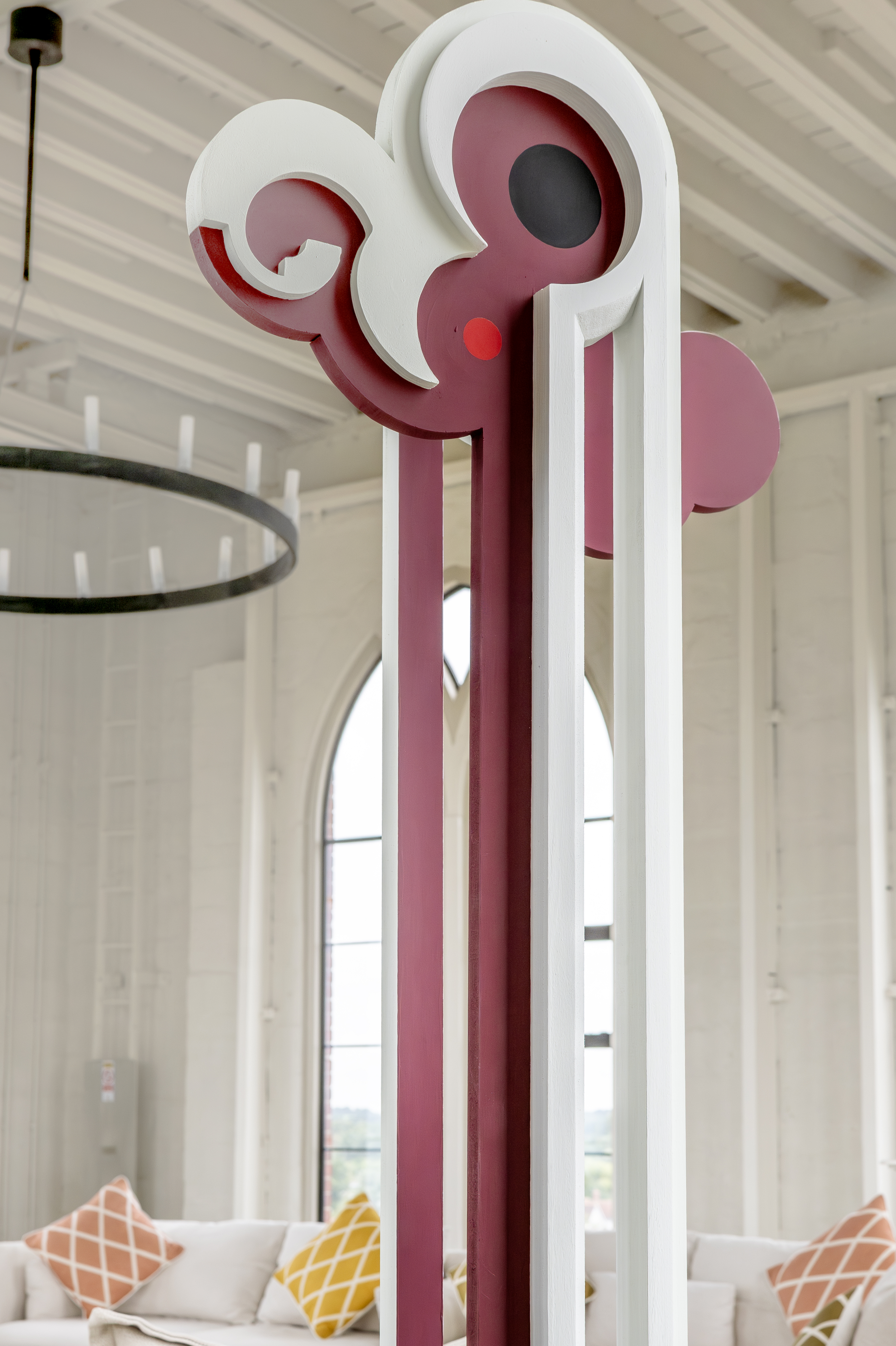
I typically make large-scale paintings on canvas through precise and physical processes. The works depict architectural formations that inherit geometries of pagan-Celtic and deconsecrated Insular forms, recast through a machine aesthetic. My aim is to construct a futuristic, palimpsestic language where ancient symbols are reformatted as mythological emblems. The works for the ARC Prize exist within the architectural world-building of the paintings. Emerging from ceremonial and mythological languages, these tall objects are slightly anthropomorphic and are inspired by the architectural follies which punctuate Ireland's postcolonial landscape.
ANNA WOODWARD
Material plays such an important role in your work. What draws you to the materials you use, and did the architecture/design of ARC Thorpeness influence the work you created for the ARC Prize?
HAZEL O’ SULLIVAN
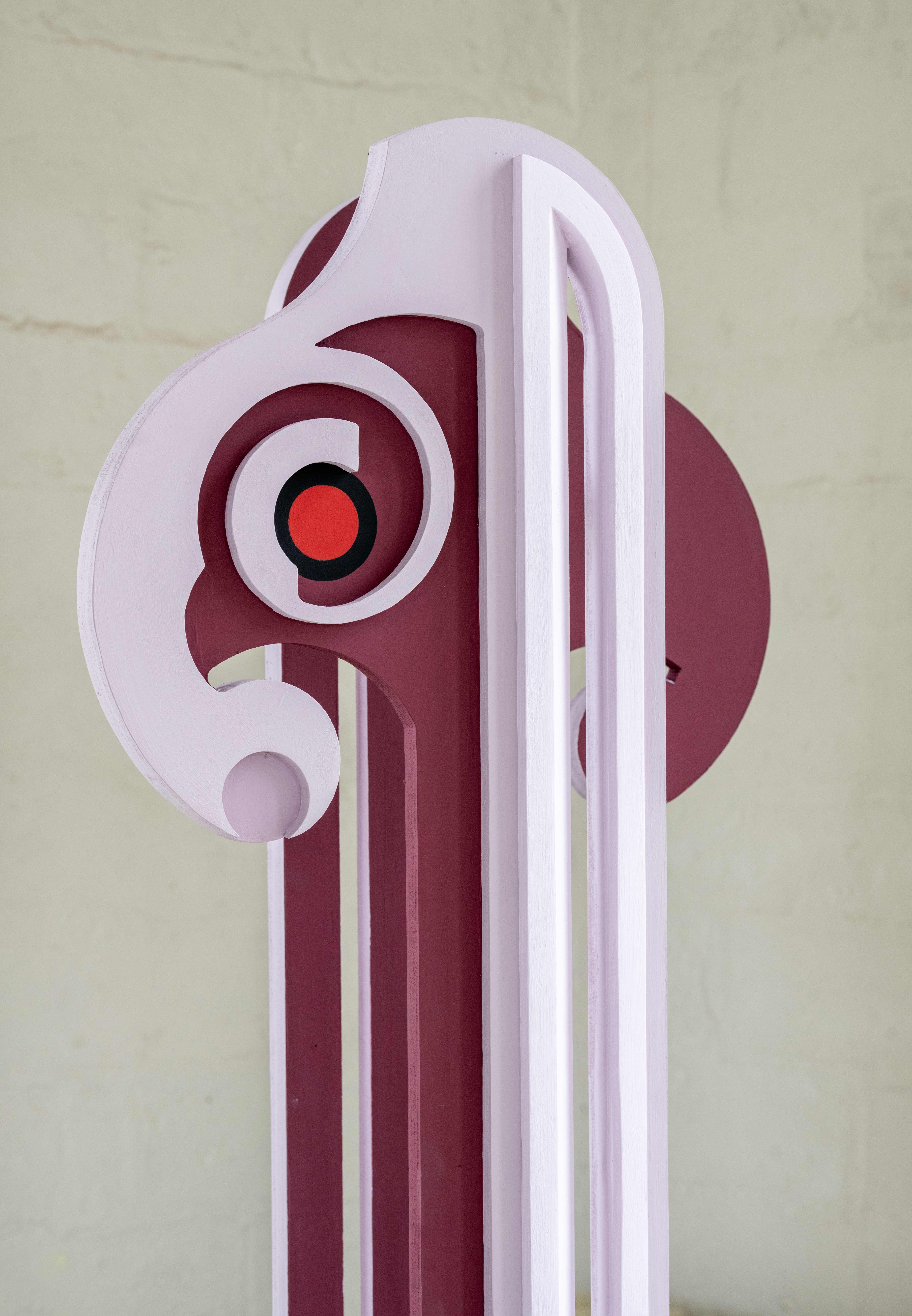
I tend to work with materials that are accessible and close at hand, and I'm interested in how ordinary materials can take on different kinds of authorities. With the sculptures at ARC Thorpeness, the emulsion-painted MDF became a way of constructing objects as temporary props that mirror the performative function of follies. Thorpeness is known for its follies and predominantly mock-Tudor architecture, and ARC Thorpeness itself was originally a water tower disguised as a castle. In this case, the sculptures 'Altarlily 1.0' and 'Altarlily 2.0' no longer refer back to an identifiable or authentic original, such as a folly imitating a tower, and instead refer to folkloric and mythological sources.
:quality(70))
ANNA WOODWARD
This commission is site-specific. What was your first impression when you visited ARC Thorpeness, and how has the building influenced your thinking?
HAZEL O’ SULLIVAN
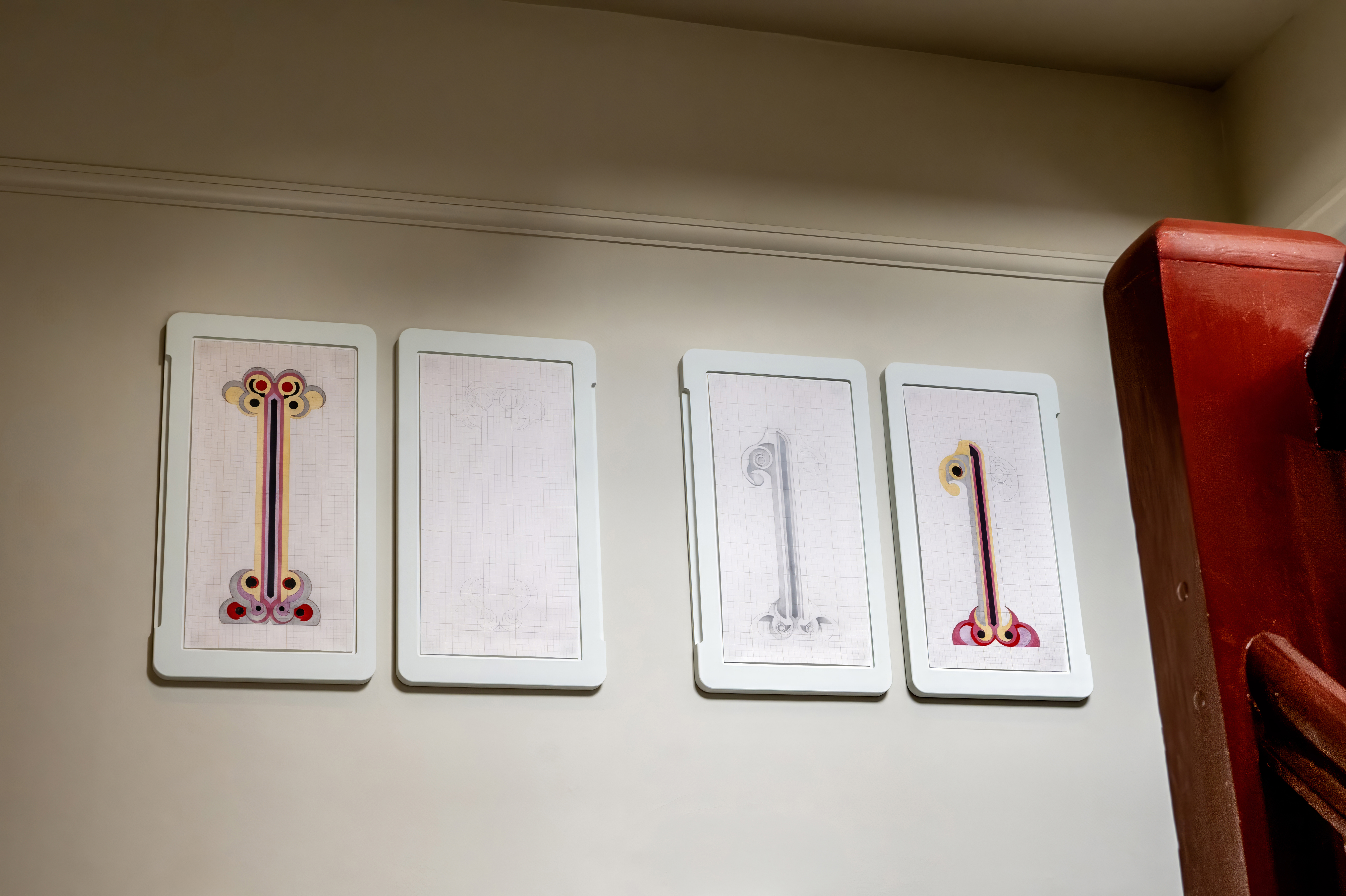
When I first visited Thorpeness I was confused by the local architecture until I later learned it was purpose-built as a fantastical holiday resort, with ARC keeping the tradition. The building itself spirals narrowly upwards towards a rewarding top floor with triple-height ceilings and 360-degree views across Thorpeness, the space where the water tank was once housed. It became obvious that the sculptures needed to be here, and that the journey upwards could slowly reveal, through paintings and drawings, the shapes and compositions that comprised them. There are four paintings in total, paired into two sets. As you make your way up the stairs, the image of each painting continues into the next, splitting the elongated form of the sculpture across two floors and two paintings. Placed one beneath the other, the two paintings would form the image of a single sculpture.
ANNA WOODWARD
Andrea Moffali described your work as feeling both unexpected and deeply familiar, even nostalgic. Do those ideas resonate with you?
HAZEL O’ SULLIVAN
Yes, and I always like this response. I think these ideas are in the work's intention. My process is often research based, and the images I create can have layers of references from folkloric sources, ancient artefacts, modern and contemporary technology. This means the final image or object can carry a sense of familiarity and inherited nostalgia without necessarily pointing to one specific source, and therefore appear uncanny. You recognise the language but can't quite place the origin.
ANNA WOODWARD
Installation can transform the way we experience a room. How do you hope visitors will move through and engage with your work?
HAZEL O’ SULLIVAN
I hope visitors will experience the work as becoming part of the architecture as they ascend the staircase, piecing it together with each floor. It's quite an intimate experience to live so closely with a body of work, and I hope that elements of my thinking process are exposed through the drawings.
ANNA WOODWARD
Alongside the main installation, you'll also be exhibiting sketches, studies and preparatory works. How important is it for audiences to see that side of your practice?
HAZEL O’ SULLIVAN
Drawing is where I think and create, and it's the most imaginative part of my process. Exhibiting drawings and allowing audiences to see this aspect of my practice can feel quite revealing, but I think as objects they're an important part of my ongoing narrative around artefactual invention and play.
ANNA WOODWARD
Community has always been central to ARC Salon. How important are conversations with other artists, curators and audiences in shaping your work?
HAZEL O’ SULLIVAN
I think as creators and arts professionals we live in a natural ecosystem that can work with us or against, and so it's vital to have a community that we can rely on. I can be a pretty solitary worker, but I make the effort to attend exhibition openings, talks and invite people into the studio.
ANNA WOODWARD
Finally, how did you experience being able to spend a week living in a space with your work exhibited?
HAZEL O’ SULLIVAN
It was a nice change of scenery from experiencing the work solely in the studio, and to see it activated within a lived space. I spent the week there with my Mam for her birthday, so it was also really special to give her the opportunity to spend some time with the work in the flesh. Since moving to London to make and develop my practice, my family often only experience the work through photographs, so being able to share it with them in person felt particularly meaningful.